Laser teeth whitening lightens yellow and stained teeth in 1 visit of 60–90 minutes, with a typical change of 2–8 shades on the VITA shade guide depending on the stain type and starting shade. It suits adults with healthy teeth and gums who have tea, coffee, tobacco or age-related stains. Book a consultation at The Master Dentist in Islamabad.
Laser teeth whitening is an in-office cosmetic dental treatment that lightens teeth with a 25–40% hydrogen peroxide gel. A dental laser or light activates the gel. The gel breaks down stain molecules in enamel and dentin. Hydrogen peroxide releases free radicals. These radicals split large colored molecules (chromogens) into smaller, lighter molecules that reflect less color. The light activates the gel, and the peroxide does the whitening. The procedure has 8 steps: consultation and shade check, scaling and polishing, gum barrier placement, gel application, laser activation, gel removal, fluoride application and post-treatment care. It suits adults aged 18 and above with healthy gums and natural front teeth. There is no downtime, so you return to work the same day. Teeth look lighter immediately, and the final shade settles within 1–2 weeks.
Laser teeth whitening at The Master Dentist is performed by Dr. Asad Nawaz Baloch, B.D.S., R.D.S., a PMDC-registered dentist.
Quick Facts
| Fact | Details |
|---|---|
| Procedure Cost | Starts from PKR 20,000 per session |
| Procedure Time | 60–90 minutes (2–4 gel cycles of 15 minutes) |
| Results | 2–8 shades lighter, visible immediately |
| Sessions | 1 session; 2–3 sessions for deep stains |
| Results Last | 1–3 years |
| Recovery | No downtime; sensitivity settles in 24–72 hours |
What Is the Price of Laser Teeth Whitening at The Master Dentist Islamabad?
Laser teeth whitening at The Master Dentist starts from PKR 20,000 per session. Islamabad dental clinics list laser whitening at PKR 20,000–60,000 per session in 2026. The Master Dentist offers 6 whitening options, listed in the price table below, including packages with scaling and polishing and a 2-session course.
The 5 factors that affect the cost of laser teeth whitening are listed below:
- Number of sessions: surface stains clear in 1 session, and tetracycline or deep stains need 2–3 sessions.
- Stain type: intrinsic stains need more gel cycles than extrinsic tea and coffee stains.
- Whitening system: laser, LED and non-light gels differ in material cost.
- Scaling and polishing: heavy tartar adds a cleaning visit before whitening.
- Maintenance trays: custom take-home trays add to the first-visit cost.
| Treatment | Duration | Cost (PKR) |
|---|---|---|
| Laser Teeth Whitening (1 session) | 60–90 minutes | From 20,000 |
| Teeth Whitening + Scaling and Polishing | 90–120 minutes | From 18,000 |
| Laser Teeth Whitening (2 sessions) | 2 visits, 1–2 weeks apart | From 40,000 |
| In-Office Bleaching (without light) | 60–90 minutes | From 15,000 |
| Custom Take-Home Whitening Trays | 2 visits + 7–14 nights at home | From 8,000 |
| Single Tooth (Internal) Whitening | 2–4 visits | From 8,000 |
Who Is an Ideal Candidate for Laser Teeth Whitening?
An ideal candidate for laser teeth whitening is an adult aged 18 or above with healthy teeth, healthy gums and surface or age-related stains. The 7 characteristics of an ideal candidate are listed below:
- Age: men and women aged 18 and above.
- Healthy gums: no bleeding, swelling or untreated gum disease.
- Healthy teeth: no active cavities, cracks or leaking fillings.
- Extrinsic stains: stains from tea, coffee, cola, curries, paan and tobacco.
- Age-related yellowing: yellow teeth from thinner enamel and darker secondary dentin.
- Natural front teeth: no crowns, veneers or bonding on the visible teeth.
- Realistic expectations: acceptance of a natural shade change of 2–8 shades.
Who Should Avoid Laser Teeth Whitening?
Laser teeth whitening is not suitable for pregnant or breastfeeding women, people under 18, and people with untreated cavities, gum disease or severe sensitivity. The 7 groups who should avoid or delay laser whitening are listed below:
- Pregnant or breastfeeding women: safety data on high-strength peroxide gels in pregnancy is lacking, so treatment is postponed until after breastfeeding.
- Teenagers under 18: larger pulp chambers in young teeth raise the risk of sensitivity.
- People with tooth decay: peroxide can enter open cavities and cause pain.
- People with gum disease or receding gums: exposed roots and inflamed gums react to the gel.
- People with severe sensitivity or enamel erosion: thin enamel lets more peroxide reach the nerve.
- People with cracked teeth or leaking fillings: gaps let gel reach the inner tooth.
- People with a peroxide allergy: hydrogen peroxide and gel additives can trigger an allergic reaction.
Crowns, veneers and composite fillings do not change color. Front restorations may need replacing after whitening to match the new shade. Book a consultation so the dentist checks your teeth before treatment.
Which Tooth Stains Can Laser Teeth Whitening Remove?
Laser teeth whitening removes extrinsic stains from tea, coffee, tobacco and food, and lightens age-related yellowing. Deep intrinsic stains respond slowly or need a different treatment. The table below shows how 6 stain types respond.
| Stain Type | Cause | Response to Laser Whitening |
|---|---|---|
| Extrinsic stains | Tea, coffee, cola, curries, smoking, paan and betel nut | Responds well in 1 session |
| Age-related yellowing | Thinner enamel and darker secondary dentin | Responds well |
| Tetracycline stains | Tetracycline or minocycline taken during tooth development | Slow response; 2–3 sessions |
| Fluorosis spots | Excess fluoride during enamel formation | Limited; microabrasion, bonding or veneers suit better |
| Grey single tooth | Trauma or root canal treatment | Needs internal bleaching |
| Crowns, veneers and fillings | Porcelain and composite materials | No color change |
Daily doodh patti chai, turmeric-based curries and paan or gutka chewing add tannin and pigment stains to enamel. These extrinsic stains respond to hydrogen peroxide gel in 1 session.
How to Prepare for Laser Teeth Whitening?
To prepare for laser teeth whitening, book a dental check-up and scaling, treat cavities and gum problems, and avoid staining drinks for 24 hours before treatment. The 7 preparation steps are listed below:
- Book a dental exam to treat cavities and gum disease first.
- Schedule scaling and polishing to remove plaque and tartar.
- Use a potassium nitrate toothpaste for 2 weeks before treatment if your teeth are sensitive.
- Stop whitening toothpaste 3 days before treatment.
- Avoid tea, coffee and smoking for 24 hours before treatment.
- Brush and floss on the day of treatment.
- Tell the dentist about pregnancy, allergies (peroxide, latex) and medicines (tetracycline antibiotics, chlorhexidine mouthwash).
How Is Laser Teeth Whitening Performed at The Master Dentist Islamabad?
Laser teeth whitening is performed in 8 steps over 60–90 minutes: consultation, scaling, gum protection, gel application, laser activation, gel removal, fluoride application and post-treatment care.
Step 1: Consultation and Shade Check
The dentist examines your teeth and gums. The starting shade is recorded on a VITA shade guide, and photographs are taken for comparison.
Step 2: Scaling and Polishing
An ultrasonic scaler removes plaque and tartar. Prophy paste then polishes the enamel so the gel contacts every tooth evenly.
Step 3: Cheek Retractor and Gum Barrier
A cheek retractor holds the lips and cheeks away from the teeth. A light-cured resin barrier covers the gums, and you wear protective eyewear.
Step 4: Whitening Gel Application
Following the manufacturer’s protocol, the dentist applies a thin layer of 25–40% hydrogen peroxide gel to the front surfaces of the visible upper and lower teeth.
Step 5: Laser Activation Cycles
The laser or light activates the gel in 15-minute cycles. Each session uses 2–4 cycles, depending on the gel system, the manufacturer’s instructions and the stain depth.
Step 6: Gel Removal and Shade Comparison
Suction removes the gel between cycles, and the teeth are rinsed. The dentist compares the new shade with the starting shade.
Step 7: Fluoride or Desensitizing Gel
The dentist applies fluoride or potassium nitrate gel to reduce sensitivity after whitening.
Step 8: Post-Treatment Care
You receive a sensitivity toothpaste and white-diet instructions for the next 48 hours. You go home straight after the session.
What Is the Aftercare for Laser Teeth Whitening?
Aftercare for laser teeth whitening is a 48-hour white diet, no smoking for 48 hours, and a sensitivity toothpaste for 3–7 days. Freshly bleached enamel is dehydrated and picks up pigments more easily, so dentists apply a 48-hour precaution window. The 8 aftercare instructions are listed below:
- Follow a white diet for 48 hours (plain rice, chicken, white bread, yogurt, milk, bananas).
- Avoid tea, coffee, cola, red sauces, curries and turmeric for 48 hours.
- Avoid smoking, vaping and paan for 48 hours.
- Use a straw for colored drinks after the first 48 hours.
- Use a potassium nitrate sensitivity toothpaste for 3–7 days.
- Avoid very hot and ice-cold food and drinks for 48 hours.
- Brush twice daily with fluoride toothpaste, and wait 30 minutes after acidic food.
- Book scaling every 6 months and a touch-up every 12–24 months.
Which Teeth Whitening Treatments Are Offered at The Master Dentist Islamabad?
The Master Dentist offers 6 teeth whitening treatments: laser whitening, LED light-activated whitening, in-office bleaching without light, nano whitening, custom take-home trays and internal bleaching. The table below compares them.
| Type | Mechanism | Time | Best For |
|---|---|---|---|
| Laser teeth whitening | 25–40% hydrogen peroxide gel activated by a dental laser | 60–90 minutes | Fast results for tea, coffee and tobacco stains |
| LED light-activated whitening | Hydrogen peroxide gel activated by blue LED light | 60–90 minutes | Patients who prefer an LED system |
| In-office bleaching without light | High-strength peroxide gel without light | 60–90 minutes | Patients who prefer a non-light protocol |
| Nano teeth whitening | Nano-particle whitening gel | 45–60 minutes | Patients who want an alternative gel system |
| Custom take-home trays | 10–22% carbamide peroxide in custom trays | 7–14 nights | Gradual whitening and maintenance |
| Internal bleaching | Bleaching agent sealed inside a root-canal-treated tooth | 2–4 visits | A single grey or dark tooth |
How Many Laser Teeth Whitening Sessions Are Needed?
The number of laser teeth whitening sessions depends on the stain type and starting shade: 1 session for surface stains, and 2–3 sessions spaced 1–2 weeks apart for deep or tetracycline stains. Maintenance involves a touch-up session every 12–24 months, or home tray top-ups every 6–12 months. Tea drinkers and smokers need touch-ups at the shorter end of these ranges.
What Are the Expected Results of Laser Teeth Whitening?
Laser teeth whitening makes teeth 2–8 shades lighter on the VITA shade guide, visible immediately and stable within 1–2 weeks. Results last 1–3 years with good oral hygiene, 6-monthly scaling and fewer staining drinks. The timeline below shows what to expect in the hours, days and weeks after treatment.
| Timeline | What to Expect |
|---|---|
| Immediately | Teeth look 2–8 shades lighter and slightly chalky from dehydration |
| 24–72 hours | Mild sensitivity settles; follow the white diet for the first 48 hours |
| 1–2 weeks | Teeth rehydrate, part of the immediate change settles back, and the final shade is recorded |
| 1–3 years | The shade lasts with scaling every 6 months and fewer tea, coffee and smoking stains |
The final shade is lighter than the starting shade but slightly darker than the shade on day 1. This settling is called rebound, and it happens as dehydrated enamel takes up water again.
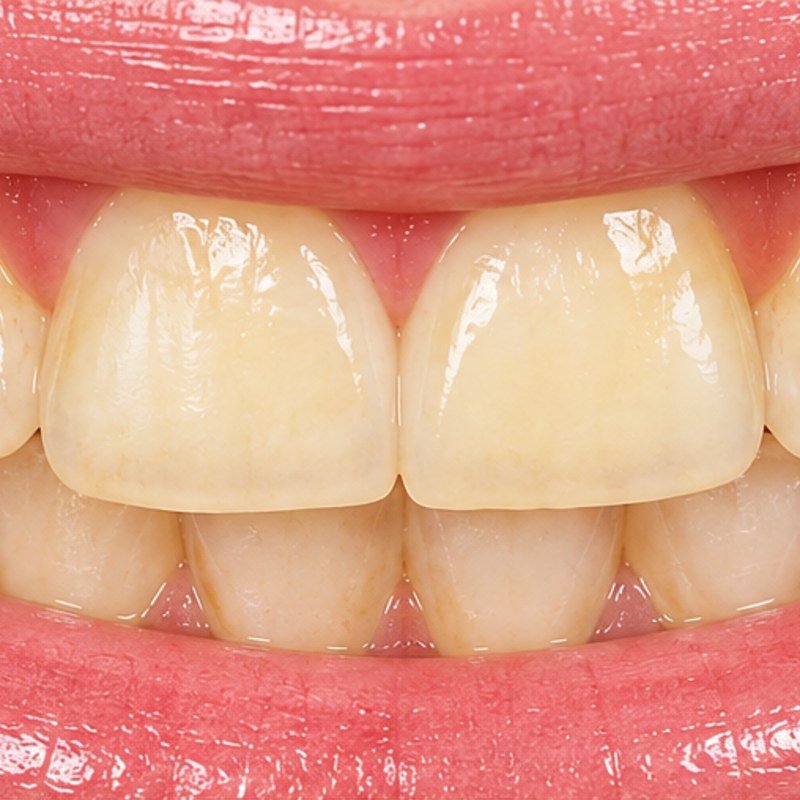
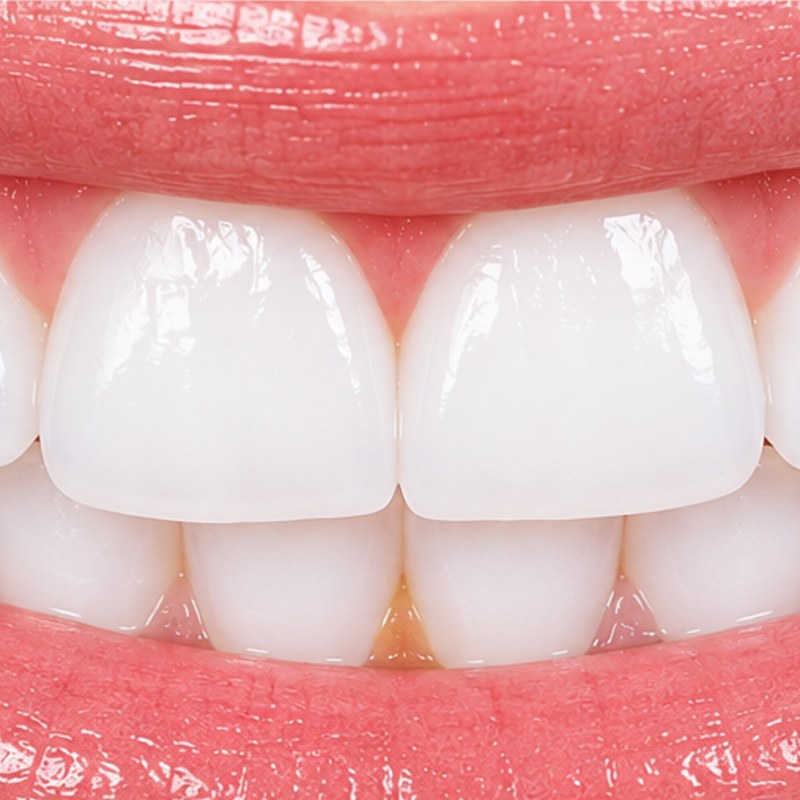
Laser Teeth Whitening Before and After
Medical Illustration
Medical Illustration
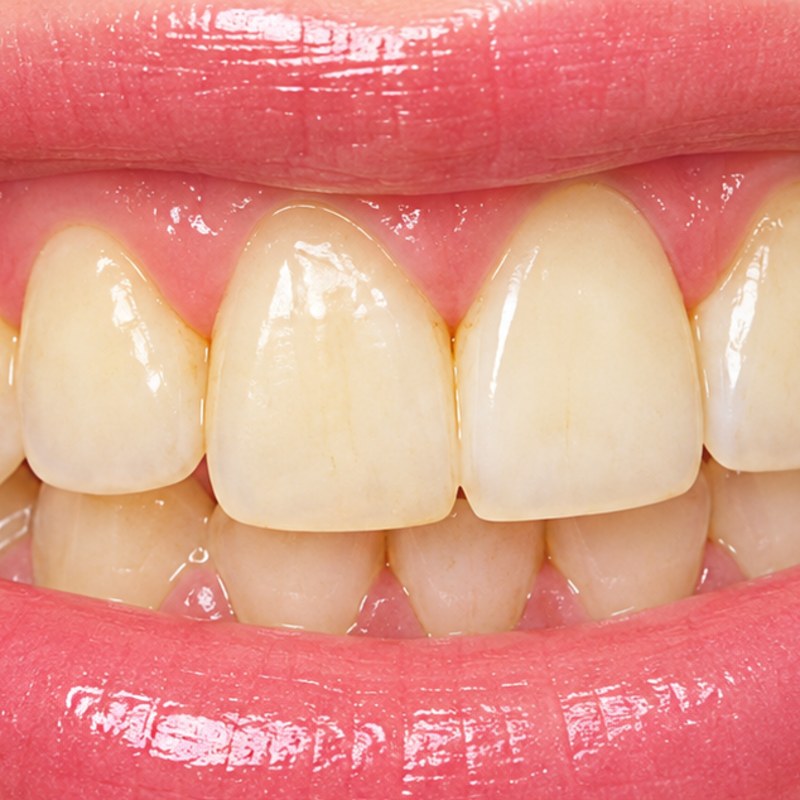
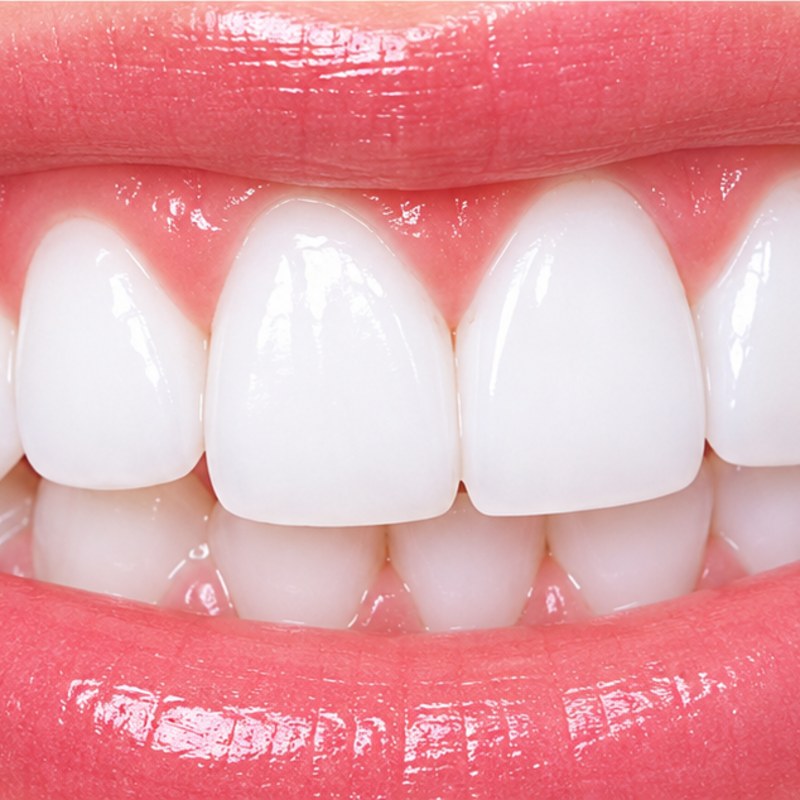
Medical Illustration
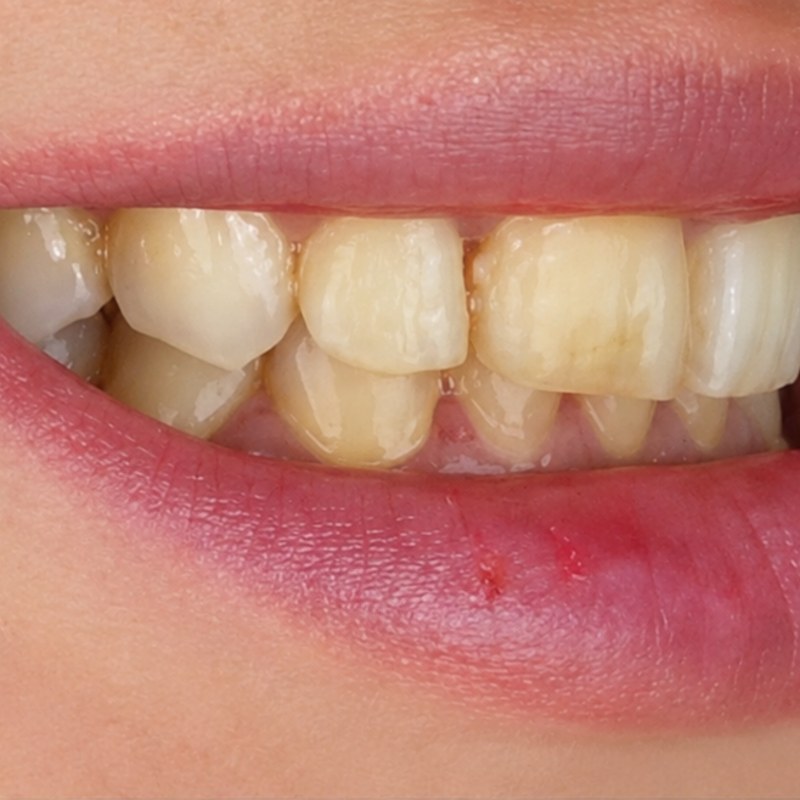
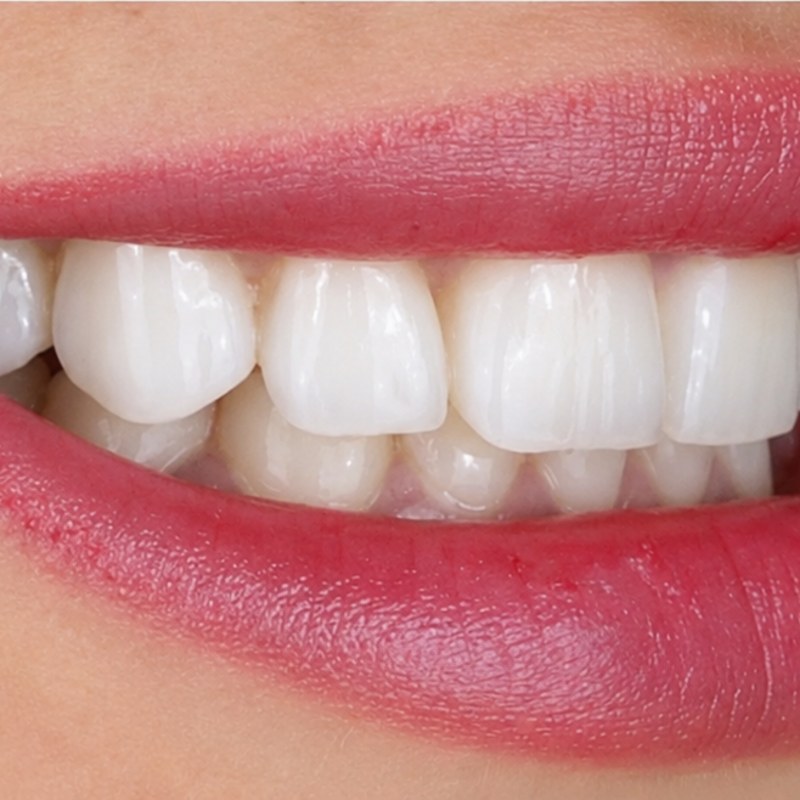
Educational Demonstration & Clinical Notice
The before and after images above are illustrations provided for patient education. They show the kind of shade change professional teeth whitening aims for on tea, coffee, tobacco and age-related stains. They are not photographs of The Master Dentist patients and do not replace an in-person dental examination. A typical laser whitening result is 2–8 shades lighter on the VITA shade guide, and crowns, veneers and fillings do not change colour.
Results vary from person to person.
What Are the Benefits of Laser Teeth Whitening?
The 10 benefits of laser teeth whitening are listed below:
- Single-visit results: visible lightening in 1 visit of 60–90 minutes.
- Dentist supervision: a PMDC-registered dentist checks teeth and gums before applying the gel.
- Gum protection: a resin barrier keeps peroxide off the gums.
- Professional-strength gel: in-office gel contains 25–40% hydrogen peroxide under dentist control, balancing results against sensitivity.
- Even shade: the gel covers all visible teeth for a uniform color.
- Deep stain removal: the gel breaks down tea, coffee, paan and tobacco pigments.
- No downtime: you return to work or study the same day.
- No drilling: whitening lightens the tooth without removing enamel.
- Sensitivity control: fluoride and potassium nitrate gels reduce post-treatment twinges.
- Easy maintenance: custom take-home trays keep the shade between visits.
What Are the Side Effects of Laser Teeth Whitening?
The 4 most common side effects of laser teeth whitening are tooth sensitivity, gum irritation, temporary white spots and an uneven shade around restorations.
- Tooth sensitivity: sharp twinges to hot and cold for 24–72 hours.
- Gum irritation: white patches where gel touched the gums, which typically fade within 24 hours.
- Temporary white spots: chalky patches on enamel that fade within 1–2 weeks as teeth rehydrate.
- Uneven shade: crowns, veneers and fillings keep their original color.
The 2 rare side effects are gum burns from gel contact and sensitivity lasting longer than 7 days. Repeated over-bleaching can also give tooth edges a translucent look. Contact your dentist if sensitivity lasts longer than 7 days or your gums blister.
Why Does Tooth Sensitivity Happen After Laser Whitening?
Tooth sensitivity happens because hydrogen peroxide passes through enamel and dentin and briefly irritates the dental pulp. Peroxide travels through microscopic channels in dentin called dentinal tubules. Bleaching also dehydrates the tooth temporarily. The irritation is reversible and settles in 24–72 hours.
Research on light and sensitivity is mixed. A 2012 meta-analysis of 11 studies by He and colleagues in the Journal of Dentistry found light activation raised the odds of sensitivity 3.5 times (OR 3.53). A 2018 meta-analysis of 21 randomized trials by Maran and colleagues in the same journal found no significant difference in sensitivity. The dentist applies a desensitizing gel after the session to reduce sensitivity.
Laser teeth whitening has 3 limitations. Results are not permanent, restorations do not whiten, and deep intrinsic stains respond slowly. Porcelain veneers or composite bonding suit cases that whitening cannot fix.
Laser Teeth Whitening vs Zoom Whitening vs Home Whitening Trays vs Veneers – Which Is Better?
Laser and Zoom whitening suit fast in-office results in 1 visit, home trays suit gradual whitening with less sensitivity, and porcelain veneers suit stains that bleaching cannot lighten. The table below compares the 4 options.
| Factor | Laser Teeth Whitening | Zoom (LED) Whitening | Home Whitening Trays | Porcelain Veneers |
|---|---|---|---|---|
| Technology | Peroxide gel + dental laser | Peroxide gel + blue LED light | Carbamide peroxide in custom trays | Thin porcelain shells bonded to teeth |
| Gel strength | 25–40% hydrogen peroxide | 25% hydrogen peroxide | 10–22% carbamide peroxide | No gel |
| Best for | Tea, coffee and tobacco stains | Tea, coffee and tobacco stains | Mild stains and maintenance | Tetracycline, fluorosis and chipped teeth |
| Chair time | 60–90 minutes | 60–90 minutes | 2 short visits | 2–3 visits |
| Sensitivity | Mild to moderate, 24–72 hours | Mild to moderate, 24–72 hours | Mild | Mild after preparation |
| Sessions | 1–3 | 1–3 | 7–14 nights | 1 course |
| Results longevity | 1–3 years | 1–3 years | 1–3 years with top-ups | 10–15 years (typical estimate) |
Light activation adds little to the result when 25–35% gels are used. He and colleagues (Journal of Dentistry, 2012, 11 studies) found light improved the immediate result only with 15–20% hydrogen peroxide gels. With 25–35% gels, light made no difference. Maran and colleagues (Journal of Dentistry, 2018, 21 randomized trials) found no significant color difference with or without light. The gel concentration, contact time and number of cycles drive the result.
Choose laser or Zoom whitening for a fast change before an event. Choose home trays for gradual whitening with less sensitivity. Choose veneers for stains that whitening cannot lighten.
Why Choose The Master Dentist Islamabad for Laser Teeth Whitening?
The Master Dentist offers dentist-led laser whitening with a dental exam, scaling, gum protection and sensitivity control. The 8 reasons to choose the clinic are listed below:
- PMDC-registered dentist for every whitening session.
- Dental exam and scaling before every whitening session.
- Resin gum barrier and protective eyewear during treatment.
- VITA shade records with before-and-after photographs.
- Fluoride or potassium nitrate gel after every session.
- Personalized plans for laser, LED, non-light or tray whitening.
- Transparent PKR pricing confirmed at consultation.
- Central location in Islamabad.
The Master Dentist Laser Teeth Whitening Dentist in Islamabad
Dr. Asad Nawaz Baloch – Dental Surgeon at The Master Dentist
Dr. Asad Nawaz Baloch is a dedicated and compassionate Dental Surgeon at The Master Dentist, committed to delivering quality dental care through a patient-centered approach. He holds a Bachelor of Dental Surgery (B.D.S.) degree and has completed his Residency in Dental Surgery (R.D.S.) from the prestigious School of Dentistry, Shaheed Zulfiqar Ali Bhutto Medical University (SZABMU), Islamabad.
With a strong academic foundation and specialized clinical training, Dr. Asad Nawaz Baloch brings extensive dental knowledge and a comprehensive understanding of oral healthcare. He focuses on carefully evaluating each patient’s dental concerns, recommending appropriate treatment options, and providing care with professionalism, precision, and attention to detail.
His approach combines clinical knowledge with a genuine commitment to patient comfort, clear communication, and personalized treatment planning. At The Master Dentist, he strives to help patients maintain healthier smiles and enjoy a comfortable, reassuring dental care experience.
Book Laser Teeth Whitening in Islamabad
Book laser teeth whitening at The Master Dentist, Islamabad. The consultation includes a dental exam, a VITA shade check and a written price quote. Call +92 340 5599322 or book online. Opening hours: Monday to Saturday, 9 am to 9 pm.
Laser Teeth Whitening Treatment FAQs
What is laser teeth whitening?
Laser teeth whitening is an in-office dental treatment that lightens teeth with a hydrogen peroxide gel activated by a laser or light. A dentist protects the gums, applies the gel and activates it in 15-minute cycles over 60–90 minutes.
Is laser teeth whitening worth it?
Laser teeth whitening is worth it for adults with tea, coffee, tobacco or age-related stains who want a fast, dentist-supervised result. The value depends on the stain type and your expectations. Results last 1–3 years, and the dentist checks teeth and gums first. Home trays cost less but take 7–14 nights.
Is laser teeth whitening safe for enamel?
Yes, laser teeth whitening is safe for enamel when a dentist performs it, although temporary surface changes can occur. The gel oxidizes stain molecules without drilling or removing enamel. Surface changes settle as the tooth rehydrates. A gum barrier and fluoride gel protect the soft tissues and the tooth surface.
Is laser teeth whitening painful?
Laser teeth whitening is not usually painful and needs no anesthesia, but it causes mild sensitivity. Some patients feel sharp twinges during the gel cycles. Mild sensitivity to hot and cold lasts 24–72 hours after the session.
How long does a laser teeth whitening session take?
A laser teeth whitening session takes 60–90 minutes. This includes gum protection, 2–4 gel cycles of 15 minutes each, and a fluoride application. Adding scaling and polishing extends the visit to 90–120 minutes.
How many shades whiter can teeth get with laser whitening?
Teeth get 2–8 shades whiter on the VITA shade guide with laser whitening. Tea, coffee and tobacco stains reach the higher end. Tetracycline stains and fluorosis reach the lower end.
Is laser teeth whitening permanent?
No, laser teeth whitening is not permanent; results last 1–3 years. Tea, coffee, curries, smoking and paan restain enamel over time. Touch-ups every 12–24 months keep the shade.
Do teeth turn yellow again after whitening?
Yes, teeth gradually yellow again over 1–3 years as new stains build up and enamel thins with age. A 48-hour white diet, 6-monthly scaling and fewer staining drinks slow this process.
Why don’t all dentists use lasers for teeth whitening?
Not all dentists use lasers because of equipment cost and evidence that light adds little whitening when 25–35% peroxide gels are used. Two Journal of Dentistry meta-analyses (2012 and 2018) reported this finding.
Can yellow teeth go white again?
Yes, yellow teeth go 2–8 shades lighter with professional whitening when the yellowing comes from stains or aging. Yellowing from thin enamel exposing dentin responds less. Veneers or bonding suit these cases.
Can laser whitening remove smoking stains?
Yes, laser whitening removes brown and yellow smoking stains in 1–2 sessions. Scaling first removes tartar that holds tar. Stopping smoking for at least 48 hours after treatment protects the new shade.
Does laser teeth whitening work on crowns, veneers or fillings?
No, laser teeth whitening does not change the color of crowns, veneers or composite fillings. Porcelain and composite do not react with peroxide. Restorations can be replaced after whitening to match the new shade.
Can a single tooth be whitened?
Yes, a single tooth can be whitened with internal bleaching. The dentist seals a bleaching agent inside a root-canal-treated tooth and replaces it over 2–4 visits until the tooth matches its neighbors.
Can I whiten my teeth during pregnancy?
No, teeth whitening is not recommended during pregnancy or breastfeeding. Safety data on high-strength peroxide gels in pregnancy is lacking. Scaling and polishing are a safe option for surface stains, although they do not whiten the natural shade.
What can I eat after laser teeth whitening?
After laser teeth whitening, eat white or light-colored foods for 48 hours: plain rice, chicken, white bread, yogurt, milk and bananas. Avoid tea, coffee, curries, turmeric and red sauces during this time.
Can I whiten my teeth at home instead?
Yes, you can whiten your teeth at home with dentist-made trays using 10–22% carbamide peroxide over 7–14 nights. Store-bought strips and powders contain weaker agents and lack a dental check, so results are slower and less even.
How soon before a wedding should I get my teeth whitened?
Get your teeth whitened 4–6 weeks before a wedding. This allows time for 2–3 sessions spaced 1–2 weeks apart and 1–2 weeks for the shade to settle. Book scaling 1–2 weeks before whitening.
Can lemon juice or baking soda whiten teeth?
No, lemon juice does not whiten teeth, and baking soda only removes light surface stains. Citric acid in lemon juice erodes enamel. Neither agent lightens the natural shade like peroxide gel.